

News RSS Feed


Fluoride debate Tweet with the Daily Echo Financial Crisis Ford's Future in Southampton


Divided by fluoride

8:54am Sunday 8th June 2008

comment Comments (25)   Have your say »

Photograph of the Author By Jon Reeve »

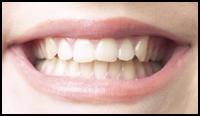
DEPENDING on who you listen to, fluoride is either a poison or a tried-and-tested cure for an entirely preventable disease. In Southampton, health chiefs want to add it to the water supply of two-thirds of the city's residents in a bid to improve chronic dental health, particularly in more deprived areas.

They say the increasingly common sight of children as young as three with mouths full of blackened, missing or replaced teeth is proof enough that something must be done.

But the plans have met with an angry and vocal response in some quarters.

Anti-fluoride campaigners argue that not only is it immoral to mass-medicate without the explicit consent of every individual, but that doing so could put people at risk from all manner of other medical side-effects.

"It is a poison - that's its only status in UK law," is the blunt assessment of Peter Richards, of Hampshire Against Fluoridation.

"It comes out somewhere between lead and arsenic for toxicity. It's hugely dangerous stuff."

With talk of bone cancer, lowered IQ in children, mottled teeth, thyroid problems, brittle bones leading to painful fractures and effects on reproductive systems causing birth defects, it is no surprise the question of fluoridation evokes strong emotions.

Fluoride is already naturally present in our water - in Southampton it is found at a level of around 0.08 parts per million (ppm).

Health chiefs want that to be topped up to 1ppm.

So how safe is fluoridation? What's the evidence and how reliable is it?

The first and perhaps most surprising observation is that only a small amount of high-quality research on the effects has been completed. And vast swathes of that is inconclusive.

Take the Government-commissioned study in 2000 which looked at the evidence in favour of artificially increasing levels of fluoridation, while also aiming to review proof of any negative effects the process might have.

This study, published by the University of York, bemoaned the quality of the previous research, saying much of it had not been carried out to modern standards, or simply lacked objectivity.

It concluded that fluoridation is likely to have a beneficial effect on the health of children's teeth - but added its impact is not guaranteed.

Similarly, the authors said that on average six people need to be fluoridated for an extra one to be decay-free - but then also revealed instances of a slight increase of problems in areas with topped-up fluoride.

The York Review concluded that the available evidence shows the benefits of fluoridation "come at the expense of an increase of fluorosis" - discoloured teeth.

It also studied other adverse effects, and while it said there was little proof of any links with cancers and bone fractures, it said the evidence available was so poor there could be no confident assertions drawn from it.

The authors called for more research - and recommended studies of the ethical, environmental, ecological, cost and legal implications too.

So does reassuring evidence lie across the Atlantic, where the fluoride crusade began in America?

Here the potential beneficial effects of fluoride in reducing tooth decay was spotted following the study of a group of children living in the Pikes Peak region of Colorado in 1909.

It transpired they lived in an area with naturally excessive fluoride in the water, and this could be linked to their pitted and discoloured teeth - a condition now called fluorosis and one of the proven drawbacks of higher levels of fluoride.

Crucially, however, their teeth displayed a much lower rate of decay than had been seen elsewhere, suggesting controlled fluoride could be an excellent preventative measure.

This study convinced medical pioneers across America to look at whether they could improve dental health by managing levels of fluoride in water and eventually led to comparison exercises between paired cities.

As part of the earliest of these experiments, in January 1945, Grand Rapids in Michigan became the first place to add fluoride to its water supply for the aim of dental benefit.

Concerns have been voiced in America ever since but the fluoridation practice has nonetheless spread across the United States and beyond, and today it is used in many countries in both the developed and developing worlds.

In the US, nearly two-thirds of the population receives topped-up levels in its water supply, with a target of three-quarters by 2010 - a level already experienced in the Irish Republic.

Australia, Chile, Brazil, Canada all have large-scale fluoridation too, while around ten per cent of people in Spain and Britain are currently fluoridated.

The practice was introduced to parts of the UK in the 1960s, most notably in the West Midlands and north-east.

Southampton health chiefs point to the experiences there - where, on average, children have half the number of decayed teeth - as their main argument for fluoridating.

Yet Europe has been divided.

Austria, Belgium, Denmark and Holland have rejected the fluoridation route, while others started but have since stopped.

West Germany, Sweden, Holland and Japan all abandoned fluoridation in the 1970s, two decades after its introduction, while the Soviet Union, Czechoslovakia, East Germany and Finland had all followed suit by the mid-1990s.

This then is the complex, conflicting and confusing backdrop against which the fluoride battle is being fought. And each faction naturally picks at the tit-bits of research which bolster their arguments.

Elizabeth McDonagh, chairman of the National Pure Water Association, opposes fluoridation.

She said: "Dental fluorosis apart, there is considerable evidence of harm from fluoride at low levels and cumulatively. Thalidomide was touted as safe and effective' before its damaging effects became known, and the dangers of smoking and asbestos went unrecognised for years.

"Fluoride is a very subtle poison, affecting enzymes, hormones and genetic structures besides teeth and bones. The York Review said that before fluoridation could be implemented as safe, further high-quality research was needed. No further high-quality research in this area has been done."

But our health chiefs remain convinced of the benefits.

Professor Cyrus Cooper is director of the Medical Research Council Epidemiology Resource Centre at the University of Southampton, which studies the factors affecting the health and illness of the population.

He backs fluoridation.

"Higher levels of fluorosis is absolutely a price worth paying,"

he said. "In some parts of the world you get fluorosis which affects the bones, but these are if there are huge doses of fluoride and that doesn't apply to the levels we're talking about."

Professor Cooper, who has been involved in fluoridation research himself, maintains there is no increased risk of fractures in fluoridated areas, and also doubts suggestions of other health problems.

He said he does not believe there is evidence fluoridation causes cancer, nor that it affects reproductive systems, kidneys, or causes brain damage.

"Those claims are much wilder in my view. I don't think there's an evidence base to prove them at all."

The professor believes fluoridation would benefit Southampton, although he can see why some are against it.

"Without doubt, I would fluoridate.

I can understand a person coming down on the other side of the line. I just wouldn't agree with them.

"It is an ethical dilemma, and even with all the evidence not everyone would say yes. But I think everything is moving towards much more research and less problems, other than that of our right to choose."

He believes even those with healthy teeth should support fluoridation because it would reduce social inequality.

"What they are promoting is the ability for everyone to share in the general wellbeing that they have been lucky enough to enjoy."

While the professor and others on both sides have made up their minds, for many the jury is still out.

The problem for us as a community is that, while our children's teeth are getting steadily worse, we have no idea when that jury will return.

And even when it does, will its verdict be unanimous?


Your Say YourEcho

bill, soton says...
10:42am Sun 8 Jun 08

Professor Cyrus Cooper
"Higher levels of fluorosis is absolutely a price worth paying,"

I don't think so.

"I not believe there is evidence fluoridation causes cancer, nor that it affects reproductive systems, kidneys, or causes brain damage."

Does not believe!

"I don't think there's an evidence base to prove them at all."

He doesn't think!

"I believe fluoridation would benefit Southampton, although I can see why some are against it."

He believes again

Professor Cyrus Cooper is quoted in The conclusion of the 1993 International Symposium on Water Fluoridation "The burden of evidence suggesting that fluoridation might be a risk factor for hip fracture is weak and not sufficient to retard the progress of the water fluoridation programme.

Do we want to take the risk - if in doubt leave it out.

As against the above read the 2001 York review Professor Trevor Sheldon's concerned letter:

DEPARTMENT OF
HEALTH STUDIES
Innovative Centre,
York Science Park,
University Road,
YORK, YO10 5DG
3/1/2001
In my capacity of chair of the Advisory Group for the systematic review on the effects of water fluoridation recently conducted by the NHS Centre for Reviews and Dissemination the University of York and as it founding director, I am concerned that the results of the review have been widely misrepresented. The review was exceptional in this field in that it was conducted by an independent group to the highest international scientific standards and a summary has been published in the British Medical Journal. It is particularly worrying then that statements which mislead the public about the review's findings have been made in press releases and briefings by the British Dental Association, British Medical Association, the National Alliance for Equity in Dental Health and the British Fluoridation Society. I should like to correct some of these errors.
1 Whilst there is evidence that water fluoridation is effective at reducing caries, the quality of the studies was generally moderate and the size of the estimated benefit, only of the order of 15%, is far from "massive".
2 The review found water fluoridation to be significantly associated with high levels of dental fluorosis which was not characterised as "just a cosmetic issue".
3 The review did not show water fluoridation to be safe. The quality of the research was too poor to establish with confidence whether or not there are potentially important adverse effects in addition to the high levels of fluorosis. The report recommended that more research was needed.
4 There was little evidence to show that water fluoridation has reduced social inequalities in dental health.
5 The review could come to no conclusion as to the cost-effectiveness of water fluoridation or whether there are different effects between natural or artificial fluoridation.
6 Probably because of the rigour with which this review was conducted, these findings are more cautious and less conclusive than in most previous reviews.
7 The review team was surprised that in spite of the large number of studies carried out over several decades there is a dearth of reliable evidence with which to inform policy. Until high quality studies are undertaken providing more definite evidence, there will continue to be legitimate scientific controversy over the likely effects and costs of water fluoridation.
(Signed) T.A. Sheldon,
Professor Trevor Sheldon, MSc, MSc, DSc, FMedSci.

nyscof, says...
10:43am Sun 8 Jun 08

The U.S. National Kidney Foundation has withdrawn its support of fluoridation and says that patients with Chronic Kidney Disease (CKD)must be informed of fluoride's adverse effects.
Those who know they have CKD and the many who don't know it yet, will retain more fluoride in the body. These kidney patients already have a high rate of bone disease - fluoride retention further puts them at risk of bone diseases.

Dentists have no clue about what fluoride does to the body. They are going on decades old research which never studied fluoride's kidney effects.

Duh, Southampton says...
10:51am Sun 8 Jun 08

We're not going to start this all over again are we? Just go back to the previous page and continue it there?
It doesn't matter what we say anyway, we are only the taxpayer and nothing more.

Jim Schultz, Ormond Beach Fl USA says...
1:46pm Sun 8 Jun 08

If the government health authorities admitted to the public fluoridation increases by 3 times damaged pourous discolored enamel from 15% to 48% and 12.5% being ugly enough to require cosmetic restoration. No one would accept almost certain damage for a slight possible one fraction of one tooth surface less cavity. Canada leading Dental fluorosis researcher now admits in his practice and others dental fluorosis damage exceeds any small benefit fluoridation might have. All the current science shows no measurable ingested benefit. Even the CDC has admitted the benefit is primarly topical but they couldn't get them selves to admit ingested fluoride is worthless except to damage teeth and chronic poisoning just like lead and arsenic. In 2005 11 of the EPA professional unions demanded a moratorium on fluoridation and congressional investigations into the fraud. They think the safety goal for fluoride should be ZERO just like lead and arsenic. Not only were the studies done very non scientific and rigged but not one study has been done on the product used per admission in congressional testimony 2000. 92 % of fluoridation in the US uses NaSiF6 which is a very different chemical and comes directly from the smokestack pollution scrubbers and has 20 plus toxic contaminates many radioactive. The same phosphate mines also produced 75% of the US yellowcake uranium until 1995 when 6 were shut down. One remains and a new uranium recovery plant will be built by Mosaic in Plant city for 2oo million. The toxic waste should be less radioactive then. The FDA has never approved any ingested fluoride ever and can not find science it is a nutrient or probable nutrient. What kind of idiot would claim this a good idea using unproven toxic waste for certain damage with little or no benefit. There must be more to this picture. Money,fear of being proven fools, no other cheap policy--No common sense or REAL science.Ask officials tough questions. They will hide or lie. Jim Schultz

Jim Schultz, Ormond Beach Fl USA says...
2:12pm Sun 8 Jun 08

The National Kidney Foundation under threat of lawsuit has now admitted that Dialysis patients and others with sever kidney problems should be aware or fluoride intake and avoid it. It is in all the foods and beverages with no information exactly how is that done. You can Reverse osmosis the water but should we have to filter our water to protect out health from added compounds? Diabetics often drink large amounts of water with glucose damage kidneys do they need fluoride damage also. Fluoride is at very high levels in the kidneys as they attempt to remove this toxic from our body. This damage was know in the 69's but no follow up research was done until lately. 1993 the US health department admitted again of unsually susceptible risk groups for fluoride damage(seniors(50) ,heart patiens, reneal problems(diabetics),
anyone low in calcium, magnesium,vit c or low in protein intake. Charles Fox of EPA said follow studies were being done under congressional questioning and they were started. None have been done yet when I got a EPA response with my congressmans help. The NRC 2006 review had 507 pagers of scientific concerns but the EPA has not gotten around to looking yet. They need to do 50 chemical reviews a year to not fall behind and the last two years they did 2 each year. Industry is allowed to prove chemicals safe by their own studies ,even when huge amounts of other studies show risk they are often ignored. Jim Schultz see fluoridealert.org or waterloowatch.com

julie, eastleigh says...
3:30pm Sun 8 Jun 08

I am a renal transplant patient, living in Eastleigh, which as I understand will also have floride added to our water, as we are served by the Otterbourn water treatment works, but as Eastleigh residents we are not being ask, and again as far as I know Eastleigh does not have the same problem with childhood tooth decay that Southampton do,now i will have to drink bottled water? I am supposed to drink upwards of 2L perday, this is going to cost me a small fortune!

paul b, says...
4:08pm Sun 8 Jun 08

This is all down to bloody benefit scroungers AGAIN

Danny G, says...
5:16pm Sun 8 Jun 08

Know that the ‘concentration’ of fluoride metered into drinking water by ANY water treatment utility will ‘NOT BE PRECISE’, and the ‘VARYING DOSAGE SWALLOWED CANNOT BE CONTROLLED’ by or for Infants, Young Children, those ‘SENSITIVE TO FLUORIDE’, and the Elderly or Sick! No Medical Professional can write any prescription that does not state, or control, the DOSAGE!

Lorraine Barter, Southampton says...
6:34pm Sun 8 Jun 08

Let us not put too much blame on parents but I do not want to have fluoride in the water.
I am not convinced that it is harmless to health.

Andy, Locks Heath says...
8:03pm Sun 8 Jun 08

THe one thing that should be clear to everyone taking a serious interest in this subject is that it is going to be impossible to "prove" the case - for or against - to either camp because of the constant exposure of any sample group to millions of other possible causal "contaminants" and the open ended latency period quoted by those opposing fluoride, which seems to be a period as long as a lifetime. In other words if someone contracts almost any illness at any point in their life after an unspecified prior exposure to fluoride for any duration, this will be attributed to fluoride by those opposed to it, and dismissed by those who support its use. A lot of the points made here quote good science, but none of the points made can get us any closer to a conclusive proof either way, so there is little point in prolonging this agony because not one person from either camp is going to swap sides! But it's good to see an informed debate.

Bob444, Soton says...
10:49pm Sun 8 Jun 08

"In some parts of the world you get fluorosis which affects the bones, but these are if there are huge doses of fluoride and that doesn't apply to the levels we're talking about."

The people of Camelford, Cornwall, were poisoned by a massive overdose of fluoride in their tap water in 1988. Google for camelford fluoride for the full horror story.

Sheitma Pance, Soton says...
10:56pm Sun 8 Jun 08

"Professor Cooper...maintains there is no increased risk of..health problems...he does not believe there is evidence fluoridation.. affects..kidneys"

Prof Cooper is either extremely ignorant or his is a liar.

Fluoride in drinking water has been PROVEN to have killed dialysis patients after a fluoride removal filter failed-This is a well documented FACT.

I can't believe Prof Cooper is not aware of this.

Andy, Locks Heath says...
11:49pm Sun 8 Jun 08

Sheitma's comment does show that these days, typing seach terms into Google is apparently far more academically demanding than several years scientific study, so I'm sure Professor Cooper is grateful for your expert and trained guidance and probably now wishes that for the last 30 years he'd done something else other than waste time researching his subject.

Danny, says...
3:37am Mon 9 Jun 08

It's so very beneficial to dump toxic diluted industrial fluoride litter into drinking water, yet it's forbidden to dump this toxin into the sea, rivers & waterways, yet they made it possible to be dumped into the drinking water, so that our bodies will benefit enormously from such an extremely safe + wonderful healthy practice!!

Edward Bernays was one of those, who helped to change the toxic image of fluoride into an extremely safe wonderful beneficial provider of gleaming smiles, absolutely safe, and so very good for the children, bestowed by a benevolent paternal government!

See how wonderful & safe fluoride litter truly is for the body:

“There is a WELL- KNOWN law of halogen displacement. The halogen group is made up as follows;

Halogen … Relative Atomic Weight
FLUORINE..19.
CHLORINE..35.5
BROMINE..80
IODINE..127.

-> http://tinyurl.com/3

43ez7

Anita Knight, St. Petersburg, FL, USA says...
4:35am Mon 9 Jun 08

Take a look at this site that is the source of fluorides for the chemical industry and fluoridation. See the AWWA Standard for Fluorosilicic Acid B703-06, available from utilities dept.
Florida Institute of Phosphate Research - FIPR Report 2003 ...
Overview of FIPR's Public & Environmental Health Program and Priorities with
current and .... Brian Birky has directed this area of research since 2000. ...
http://www.fipr.stat
e.fl.us/FIPRreport20
03/research-area-pub
lic-health2003.htm - 25k - Cached


Julie, eastleigh says...
7:25am Mon 9 Jun 08

You don't need to have 30 years of research to understand that this element is bad for the human body.I have been a Renal patient for 34 years, and having a illness like this gives you a very good grasp on how the body handles toxic substances.The kidneys are the last filtering systems in the body,when those filters are not working 100% these toxic chemicals build up in the body.The same toxic chemicals then effect the kidneys,as they are the most fragile of the internal organs.
Why not treat the part of the population with the dental decay, with floride tablets, and not force it on all of us.

bill, soton says...
9:07am Mon 9 Jun 08

Bob444 wrote:
\"In some parts of the world you get fluorosis which affects the bones, but these are if there are huge doses of fluoride and that doesn\'t apply to the levels we\'re talking about.\" The people of Camelford, Cornwall, were poisoned by a massive overdose of fluoride in their tap water in 1988. Google for camelford fluoride for the full horror story.
Bob
I agree that there will always be a danger of a mistake in injecting fluoride into the drinking water, There are many recorded cases but in Camelford it wasn't fluoride. The poisoning happened when 20 tonnes of aluminium sulphate was poured into the wrong tank at a treatment works. Environmentalist Doug Cross who is now very active in fighting the push for fluoride blames the loss of his wife who suffered from a brain disease similar to Alzheimer's after the incident. Her brain was found to have high levels of aluminium.

jim, oregon usa says...
5:26am Tue 10 Jun 08

Resist fluoridation at all costs.Hitler used it to keep the Poles tranquilized. Fluoride is the main component in prozac type drugs. That is the real reason your lovely gov wants you to ingest it.Soon you will become aware.

Mr Parrot, says...
12:47pm Tue 10 Jun 08

I suggest anyone reading these comments should have a look at Quackwatch (http://tinyurl.com/


389f84) especially the section 'How Poisonmongers Work'. You see most of the tactics at play here.

Mr Parrot, says...
4:51pm Tue 10 Jun 08

Since everyone seems to believe what they read on the net, I suggest you look at Quackwatch (http://tinyurl.com/

389f84) to understand what is happening on this comments column.

JJ, Hampshire says...
6:49pm Tue 10 Jun 08

What the fluoride lobby don’t seem capable of grasping, is that the risk exists, and they cannot get away from it. Even if one were to discount all the medical and scientific evidence of serious chronic and fatal disease, dental fluorosis remains a real and undisputed fact. And embarrassingly for them, it is not treatable on the NHS, unlike having a filling. It requires lifelong and expensive private treatment. So what would the pro-fluoride lot prefer – a filling on the NHS or crumbling ugly brown stained teeth for the rest of their lives that will cost them a fortune to disguise? I think we will find out when it happens to them!
However, the real point is that fluoridation is like no other ‘health measure’. There is no choice, no escape and no individual consent to treatment. No medication whatsoever, whether safe or harmful, can legally be administered indiscriminately to an entire population. It is not just absurd, it is criminal – and those who are proposing it, should be put on trial. Perhaps we should set up a bank account for donations to take legal action against these people. It looks as though the law is the only way we will get rid fluoridation – and them!

Danny, says...
9:10pm Tue 10 Jun 08

Quackwatch Warning

Yes. When the self-named "Quackbusters" stumbled around to find a derisive name to call their victims, they picked the word "Quack," without ever bothering to discover it's origins. Its original meaning, from Europe, comes from the term "quacksalver" which was used to describe Dentists who were dumb enough to use mercury (a poison) as fillings for teeth. Look at propagandist, and "Quackbuster" king-pin, Stephen Barrett's website (quackwatch.com), and you'll find that HE IS IN FAVOR of mercury (amalgam) tooth fillings.

Barrett, his cronies, and minions, are not known to do intelligent research.

EVIL?

Yes. The "Quackbuster Conspiracy" was started shortly after the American Medical Association (AMA) lost the court battle to the Chiropractors in a case begun in Federal court in 1976. The Federal judge ordered the AMA's covert operation shut down - and leave the Chiropractors alone. The AMA files, library, etc., ended up in Stephen Barrett's 1,800 square foot basement in Allentown, PA. Barrett, and his minions, had the common sense to stay away from criticizing Chiropractors for quite some time. Barrett has since abandoned that common sense.

Federal judges have a way of enforcing their decisions using shackles, Federal Marshals, the federal prison facilities, asset seizure, etc... Even Barrett, in all his incredible arrogance, isn't dumb enough to match wills with a Federal Judge. I think the Chiropractic Association should consider re-opening the Wilks case in front of that same Federal Judge - and point right at Barrett, and his cronies.

http://tinyurl.com/6
q4heh

Mr Parrot, says...
11:07pm Tue 10 Jun 08

es. When the self-named "Quackbusters" stumbled around to find a derisive name to call their victims, they picked the word "Quack," without ever bothering to discover it's origins. Its original meaning, from Europe, comes from the term "quacksalver" which was used to describe Dentists who were dumb enough to use mercury

Err, no, The word quack did indeed originate in Europe during that wonderful uplifting period we laughingly refer to as the Plague. When our ancestors had bilboes in their armpits and groins. Oh, how we laughed.

The quacks were the ones with the answers, so called because they wore 'beaks' over their mouths to protect themselves.

And zilch to do with this debate.

Except from you folks living in the middle ages.

P Griffiths, Andover says...
6:50pm Tue 17 Jun 08

The following post is available as a highly condensed landscape A4 duplex capable single sheet document for Word specifically formatted to be used as a flyer for home delivery. If you want it contact griffithspeter0@goog
lemail.com

sorry about the small print!

GIVE YOUR KIDS THE GIFT OF BONE CANCER, BRAIN DAMAGE AND STERILITY

The proposals to fluoridate public water with toxic compounds of hexaflourasilic acid are a direct breech of European regulations forbidding the mass medication of human populations. It is also an offence under section 23 of the offences against the person Act of 1861. The Water Supply (Fluoridation Indemnities) (England) Regulations 2005 (Statutory Instrument 2005 No. 920) were a specific attempt by the government to provide the water supply industry with "blanket" immunity against civil and criminal liability arising out of these criminal acts. Poisoning by Fluoride, a known and deadly toxin, has no place in the public health system and its introduction has more to do with eugenics and population control than dental care. Alan Johnson is more than aware of this. Unfortunately unelected and unaccountable "health quangos" will be seeking to call the shots on this issue and most of them will be riven with the corrupt members of Common Purpose. An organisation more sinister than the Real IRA.

Fluoridation of public water supplies should not be allowed! And here’s why: WHY EPA’S HEADQUARTERS UNION OF SCIENTISTS OPPOSES FLUORIDATION*

The following documents why our union, formerly National Federation of Federal Employees Local 2050 and since April 1998 Chapter 280 of the National Treasury Employees Union, took the stand it did opposing fluoridation of drinking water supplies. Our union is comprised of and represents the approximately 1500 scientists, lawyers, engineers and other professional employees at EPA Headquarters here in Washington, D.C.

The union first became interested in this issue rather by accident. Like most Americans, including many physicians and dentists, most of our members had thought that fluoride’s only effects were beneficial — reductions in tooth decay, etc. We too believed assurances of safety and effectiveness of water fluoridation.‡

Then, as EPA was engaged in revising its drinking water standard for fluoride in 1985, an employee came to the union with a complaint: he said he was being forced to write into the regulation a statement to the effect that EPA thought it was all right for children to have "funky" teeth. It was OK, EPA said, because it considered that condition to be only a cosmetic effect, not an adverse health effect. The reason for this EPA position was that it was under political pressure to set its health-based standard for fluoride at 4 mg/liter. At that level, EPA knew that a significant number of children develop moderate to severe dental fluorosis, but since it had deemed the effect as only cosmetic, EPA didn’t have to set its health-based standard at a lower level to prevent it.

We tried to settle this ethics issue quietly, within the family, but EPA was unable or unwilling to resist external political pressure, and we took the fight public with a union amicus curiae brief‡‡ in a lawsuit filed against EPA by a public interest group. The union has published on this initial involvement period in detail.1

Since then our opposition to drinking water fluoridation has grown, based on the scientific literature documenting the increasingly out-of-control exposures to fluoride, the lack of benefit to dental health from ingestion of fluoride and the hazards to human health from such ingestion. These hazards include acute toxic hazard, such as to people with impaired kidney function, as well as chronic toxic hazards of gene mutations, cancer, reproductive effects, neurotoxicity, bone pathology and dental fluorosis. First, a review of recent neurotoxicity research results.

In 1995, Mullenix and co-workers2 showed that rats given fluoride in drinking water at levels that give rise to plasma fluoride concentrations in the range seen in humans suffer neurotoxic effects that vary according to when the rats were given the fluoride – as adult animals, as young animals, or through the placenta before birth. Those exposed before birth were born hyperactive and remained so throughout their lives. Those exposed as young or adult animals displayed depressed activity. Then in 1998, Guan and co-workers3 gave doses similar to those used by the Mullenix research group to try to understand the mechanism(s) underlying the effects seen by the Mullenix group. Guan’s group found that several key chemicals in the brain – those that form the membrane of brain cells – were substantially depleted in rats given fluoride, as compared to those who did not get fluoride.

Another 1998 publication by Varner, Jensen and others4 reported on the brain- and kidney-damaging effects in rats that were given fluoride in drinking water at the same level deemed "optimal" by pro-fluoridation groups, namely 1 part per million (1 ppm). Even more pronounced damage was seen in animals that got the fluoride in conjunction with aluminum. These results are especially disturbing because of the low dose level of fluoride that shows the toxic effect in rats - rats are more resistant to fluoride than humans. This latter statement is based on Mullenix’s finding that it takes substantially more fluoride in the drinking water of rats than of humans to reach the same fluoride level in plasma. It is the level in plasma that determines how much fluoride is "seen" by particular tissues in the body. So when rats get 1 ppm in drinking water, their brains and kidneys are exposed to much less fluoride than humans getting 1 ppm, yet they are experiencing toxic effects. Thus we are compelled to consider the likelihood that humans are experiencing damage to their brains and kidneys at the "optimal" level of 1 ppm.

In support of this concern are results from two epidemiology studies from China5,6 that show decreases in I.Q. in children who get more fluoride than the control groups of children in each study. These decreases are about 5 to 10 I.Q. points in children aged 8 to 13 years.

Another troubling brain effect has recently surfaced: fluoride’s interference with the function of the brain’s pineal gland. The pineal gland produces melatonin which, among other roles, mediates the body’s internal clock, doing such things as governing the onset of puberty. Jennifer Luke7 has shown that fluoride accumulates in the pineal gland and inhibits its production of melatonin. She showed in test animals that this inhibition causes an earlier onset of sexual maturity, an effect reported in humans as well in 1956, as part of the Kingston/Newburgh study, which is discussed below. In fluoridated Newburgh, young girls experienced earlier onset of menstruation (on average, by six months) than girls in non-fluoridated Kingston.8

From a risk assessment perspective, all these brain effect data are particularly compelling and disturbing because they are convergent.

We looked at the cancer data with alarm as well. There are epidemiology studies that are convergent with whole-animal and single-cell studies (dealing with the cancer hazard), just as the neurotoxicity research just mentioned all points in the same direction. EPA fired the Office of Drinking Water’s chief toxicologist, Dr. William Marcus, who also was our local union’s treasurer at the time, for refusing to remain silent on the cancer risk issue.9 The judge who heard the lawsuit he brought against EPA over the firing made the finding - that EPA fired him over his fluoride work and not for the phony reason put forward by EPA management at his dismissal. Dr. Marcus won his lawsuit and is again at work at EPA. Documentation is available on request.

The type of cancer of particular concern with fluoride, although not the only type, is osteosarcoma, especially in males. The National Toxicology Program conducted a two-year study10 in which rats and mice were given sodium fluoride in drinking water. The positive result of that study (in which malignancies in tissues other than bone were also observed), particularly in male rats, is convergent with a host of data from tests showing fluoride’s ability to cause mutations (a principal "trigger" mechanism for inducing a cell to become cancerous) e.g.11a,b,c,d and data showing increases in osteosarcomas in young men in New Jersey,12 Washington and Iowa13 based on their drinking fluoridated water. It was his analysis, repeated statements about all these and other incriminating cancer data, and his requests for an independent, unbiased evaluation of them that got Dr. Marcus fired.

Bone pathology other than cancer is a concern as well. An excellent review of this issue was published by Diesendorf et al. in 1997.14 Five epidemiology studies have shown a higher rate of hip fractures in fluoridated vs. non-fluoridated communities.15a,b,c,
d,e Crippling skeletal fluorosis was the endpoint used by EPA to set its primary drinking water standard in 1986, and the ethical deficiencies in that standard setting process prompted our union to join the Natural Resources Defense Council in opposing the standard in court, as mentioned above.

Regarding the effectiveness of fluoride in reducing dental cavities, there has not been any double-blind study of fluoride’s effectiveness as a caries preventative. There have been many, many small scale, selective publications on this issue that proponents cite to justify fluoridation, but the largest and most comprehensive study, one done by dentists trained by the National Institute of Dental Research, on over 39,000 school children aged 5-17 years, shows no significant differences (in terms of decayed, missing and filled teeth) among caries incidences in fluoridated, non-fluoridated and partially fluoridated communities.16 The latest publication17 on the fifty-year fluoridation experiment in two New York cities, Newburgh and Kingston, shows the same thing. The only significant difference in dental health between the two communities as a whole is that fluoridated Newburgh, N.Y. shows about twice the incidence of dental fluorosis (the first, visible sign of fluoride chronic toxicity) as seen in non-fluoridated Kingston.

John Colquhoun’s publication on this point of efficacy is especially important.18 Dr. Colquhoun was Principal Dental Officer for Auckland, the largest city in New Zealand, and a staunch supporter of fluoridation - until he was given the task of looking at the world-wide data on fluoridation’s effectiveness in preventing cavities. The paper is titled, "Why I changed My Mind About Water Fluoridation." In it Colquhoun provides details on how data were manipulated to support fluoridation in English-speaking countries, especially the U.S. and New Zealand. This paper explains why an ethical public health professional was compelled to do a 180-degree turn on fluoridation.

Further on the point of the tide turning against drinking water fluoridation, statements are now coming from other dentists in the pro-fluoride camp who are starting to warn that topical fluoride (e.g. fluoride in tooth paste) is the only significantly beneficial way in which that substance affects dental health.19,20,21 However, if the concentrations of fluoride in the oral cavity are sufficient to inhibit bacterial enzymes and cause other bacteriostatic effects, then those concentrations are also capable of producing adverse effects in mammalian tissue, which likewise relies on enzyme systems. This statement is based not only on common sense, but also on results of mutation studies which show that fluoride can cause gene mutations in mammalian and lower order tissues at fluoride concentrations estimated to be present in the mouth from fluoridated tooth paste.22 Further, there were tumors of the oral cavity seen in the NTP cancer study mentioned above, further strengthening concern over the toxicity of topically applied fluoride.

In any event, a person can choose whether to use fluoridated tooth paste or not (although finding non-fluoridated kinds is getting harder and harder), but one cannot avoid fluoride when it is put into the public water supplies.

So, in addition to our concern over the toxicity of fluoride, we note the uncontrolled - and apparently uncontrollable - exposures to fluoride that are occurring nationwide via drinking water, processed foods, fluoride pesticide residues and dental care products. A recent report in the lay media,23 that, according to the Centers for Disease Control, at least 22 percent of America’s children now have dental fluorosis, is just one indication of this uncontrolled, excess exposure. The finding of nearly 12 percent incidence of dental fluorosis among children in un-fluoridated Kingston New York17 is another. For governmental and other organizations to continue to push for more exposure in the face of current levels of over-exposure coupled with an increasing crescendo of adverse toxicity findings is irrational and irresponsible at best.

Thus, we took the stand that a policy which makes the public water supply a vehicle for disseminating this toxic and prophylactically useless (via ingestion, at any rate) substance is wrong.

We have also taken a direct step to protect the employees we represent from the risks of drinking fluoridated water. We applied EPA’s risk control methodology, the Reference Dose, to the recent neurotoxicity data. The Reference Dose is the daily dose, expressed in milligrams of chemical per kilogram of body weight, that a person can receive over the long term with reasonable assurance of safety from adverse effects. Application of this methodology to the Varner et al4 data leads to a Reference Dose for fluoride of 0.000007 mg/kg-day. Persons who drink about one quart of fluoridated water from the public drinking water supply of the District of Columbia while at work receive about 0.01mg/kg-day from that source alone. This amount of fluoride is more than 100 times the Reference Dose. On the basis of these results the union filed a grievance, asking that EPA provide un-fluoridated drinking water to its employees.

The implication for the general public of these calculations is clear. Recent, peer-reviewed toxicity data, when applied to EPA’s standard method for controlling risks from toxic chemicals, require an immediate halt to the use of the nation’s drinking water reservoirs as disposal sites for the toxic waste of the phosphate fertilizer industry
.1 Applying the NAEP code of ethics to the Environmental Protection Agency and the fluoride in drinking water standard. Carton, R.J. and Hirzy, J.W. Proceedings of the 23rd Ann. Conf. of the National Association of Environmental Professionals. 20-24 June, 1998. GEN 51-61. On-line at URL http//:www.rvi.net/~
fluoride/naep.htm. 2 Neurotoxicity of sodium fluoride in rats. Mullenix, P.J., Denbesten, P.K., Schunior, A. and Kernan, W.J. Neurotoxicol. Teratol. 17 169-177 (1995). 3 Influence of chronic fluorosis on membrane lipids in rat brain. Z.Z. Guan, Y.N. Wang, K.Q. Xiao, D.Y. Dai, Y.H. Chen, J.L. Liu, P. Sindelar and G. Dallner, Neurotoxicology and Teratology 20 537-542 (1998).4 Chronic administration of aluminum- fluoride or sodium-fluoride to rats in drinking water: alterations in neuronal and cerebrovascular integrity. Varner, J.A., Jensen, K.F., Horvath, W. And Isaacson, R.L. Brain Research 784 284-298 (1998). 5 Effect of high fluoride water supply on children’s intelligence. Zhao, L.B., Liang, G.H., Zhang, D.N., and Wu, X.R. Fluoride 29 190-192 (1996). 6 Effect of fluoride exposure on intelligence in children. Li, X.S., Zhi, J.L., and Gao, R.O. Fluoride 28 (1995). 7 Effect of fluoride on the physiology of the pineal gland. Luke, J.A. Caries Research 28 204 (1994). 8 Newburgh-Kingston caries-fluorine study XIII. Pediatric findings after ten years. Schlesinger, E.R., Overton, D.E., Chase, H.C., and Cantwell, K.T. JADA 52 296-306 (1956). 9 Memorandum dated May 1, 1990. Subject: Fluoride Conference to Review the NTP Draft Fluoride Report; From: Wm. L. Marcus, Senior Science Advisor ODW; To: Alan B. Hais, Acting Director Criteria & Standards Division ODW. 10 Toxicology and carcinogenesis studies of sodium fluoride in F344/N rats and B6C3F1 mice. NTP Report No. 393 (1991). 11a Chromosome aberrations, sister chromatid exchanges, unscheduled DNA synthesis and morphological neoplastic transformation in Syrian hamster embryo cells. Tsutsui et al. Cancer Research 44 938-941 (1984). 11b Cytotoxicity, chromosome aberrations and unscheduled DNA synthesis in cultured human diploid fibroblasts. Tsutsui et al. Mutation Research 139 193-198 (1984). 11c Positive mouse lymphoma assay with and without S-9 activation; positive sister chromatid exchange in Chinese hamster ovary cells with and without S-9 activation; positive chromosome aberration without S-9 activation. Toxicology and carcinogenesis studies of sodium fluoride in F344/N rats and B6C3F1 mice. NTP Report No. 393 (1991). 11d An increase in the number of Down’s syndrome babies born to younger mothers in cities following fluoridation. Science and Public Policy 12 36-46 (1985). 12 A brief report on the association of drinking water fluoridation and the incidence of osteosarcoma among young males. Cohn, P.D. New Jersey Department of Health (1992). 13 Surveillance, epidemiology and end results (SEER) program. National Cancer Institute in Review of fluoride benefits and risks. Department of Health and Human Services. F1-F7 (1991). 14 New evidence on fluoridation. Diesendorf, M., Colquhoun, J., Spittle, B.J., Everingham, D.N., and Clutterbuck, F.W. Australian and New Zealand J. Public Health. 21 187-190 (1997). 15a Regional variation in the incidence of hip fracture: U.S. white women aged 65 years and older. Jacobsen, S.J., Goldberg, J., Miles, ,T.P. et al. JAMA 264 500-502 (1990). 15b Hip fracture and fluoridation in Utah’s elderly population. Danielson, C., Lyon, J.L., Egger, M., and Goodenough, G.K. JAMA 268 746-748 (1992). 15c The association between water fluoridation and hip fracture among white women and men aged 65 years and older: a national ecological study. Jacobsen, S.J., Goldberg, J., Cooper, C. and Lockwood, S.A. Ann. Epidemiol.2 617-626 (1992). 15d Fluorine concentration is drinking water and fractures in the elderly . Jacqmin-Gadda, H., Commenges, D. and Dartigues, J.F. JAMA 273 775-776 (1995). 15e Water fluoridation and hip fracture . Cooper, C., Wickham, C.A.C., Barker, D.J.R. and Jacobson, S.J. JAMA 266 513-514 (1991). 16 Water fluoridation and tooth decay: Results from the 1986-1987 national survey of U.S. school children. Yiamouyannis, J. Fluoride 23 55-67 (1990). 17 Recommendations for fluoride use in children. Kumar, J.V. and Green, E.L. New York State Dent. J. (1998) 40-47. 18 Why I changed my mind about water fluoridation. Colquhoun, J. Perspectives in Biol. and Medicine 41 29-44 (1997). 19 A re-examination of the pre-eruptive and post-eruptive mechanism of the anti-caries effects of fluoride: is there any anti-caries benefit from swallowing fluoride? Limeback, H. Community Dent. Oral Epidemiol. 27 62-71 (1999). 20 Fluoride supplements for young children: an analysis of the literature focussing on benefits and risks. Riordan, P.J. Community Dent. Oral Epidemiol. 27 72-83 (1999). 21 Prevention and reversal of dental caries: role of low level fluoride. Featherstone, J.D. Community Dent. Oral Epidemiol. 27 31-40 (1999). 22 Appendix H. Review of fluoride benefits and risks. Department of Health and Human Services. H1-H6 (1991). 23 Some young children get too much fluoride. Parker-Pope, T. Wall Street Journal Dec. 21, 1998. 24 Letter from Rebecca Hanmer, Deputy Assistant Administrator for Water, to Leslie Russell re: EPA view on use of by-product fluosilicic acid as low cost source of fluoride to water authorities. March 30, 1983. OTHER CITATIONS a Exposure to high fluoride concentrations in drinking water is associated with decreased birth rates. Freni, S.C. J. Toxicol. Environ. Health 42 109-121 (1994). bAmeliorative effects of reduced food-borne fluoride on reproduction in silver foxes. Eckerlin, R.H., Maylin, G.A., Krook, L., and Carmichael, D.T. Cornell Vet. 78 75-91 (1988). cMilk production of cows fed fluoride contaminated commercial feed. Eckerlin, R.H., Maylin, G.A., and Krook, L. Cornell Vet. 76 403-404 (1986). dMaternal-fetal transfer of fluoride in pregnant women. Calders, R., Chavine, J., Fermanian, J., Tortrat, D., and Laurent, A.M. Biol. Neonate 54 263-269 (1988). eEffects of fluoride on screech owl reproduction: teratological evaluation, growth, and blood chemistry in hatchlings. Hoffman, D.J., Pattee, O.H., and Wiemeyer, S.N. Toxicol. Lett. 26 19-24 (1985). fFluoride intoxication in dairy calves. Maylin, G.A., Eckerlin, R.H., and Krook, L. Cornell Vet. 77 84-98 (1987). gFluoride inhibition of protein synthesis. Holland, R.I. Cell Biol. Int. Rep. 3 701-705 (1979). hAn unexpectedly strong hydrogen bond: ab initio calculations and spectroscopic studies of amide-fluoride systems. Emsley, J., Jones, D.J., Miller, J.M., Overill, R.E. and Waddilove, R.A. J. Am. Chem. Soc. 103 24-28 (1981). iThe effect of sodium fluoride on the growth and differentiation of human fetal osteoblasts. Song, X.D., Zhang, W.Z., Li, L.Y., Pang, Z.L., and Tan, Y.B. Fluoride 21 149-158 (1988). jModulation of phosphoinositide hydrolysis by NaF and aluminum in rat cortical slices. Jope, R.S. J. Neurochem. 51 1731-1736 (1988). kThe crystal structure of fluoride-inhibited cytochrome c peroxidase. Edwards, S.L., Poulos, T.L., Kraut, J. J. Biol. Chem. 259 12984-12988 (1984). lIntracellular fluoride alters the kinetic properties of calcium currents facilitating the investigation of synaptic events in hippocampal neurons. Kay, A.R., Miles, R., and Wong, R.K.S. J. Neurosci. 6 2915-2920 (1986). mFluoride intoxication: a clinical-hygienic study with a review of the literature and some experimental investigations. Roholm, K. H.K. Lewis Ltd (London) (1937). nToxin-induced blood vessel inclusions caused by the chronic administration of aluminum and sodium fluoride and their implications for dementia. Isaacson, R.L., Varner, J.A., and Jensen, K. F. Ann. N.Y. Acad. Sci. 825 152-166 (1997). oAllergy and hypersensitivity to fluoride. Spittle, B. Fluoride 26 267-273 (1993). *For Correspondence: Bill Hirzy, NTEU Headquarters, Box 76082 Washington, DC 20013. TO RECEIVE THIS DOCUMENT AS AN EMAIL TXT YOUR EMAIL ADDRESS TO 07510258880
‡For a history of how drinking water fluoridation began, see "Fluoride, Teeth and the Atomic Bomb", by investigative reporters Joel Griffiths and Chris Bryson ,

on-line at http://www.ia4u.net/
~sherrell/bomb.htm.
‡‡http://www.rvi.net
/~fluoride/amicus.ht
m
*PLEASE PHOTOCOPY THIS DOCUMENT FOR YOUR FRIENDS AND NEIGHBOURS-GET THE TRUTH OUT*

Jennifer, Hampshire says...
5:36pm Mon 7 Jul 08

Official statements from South