


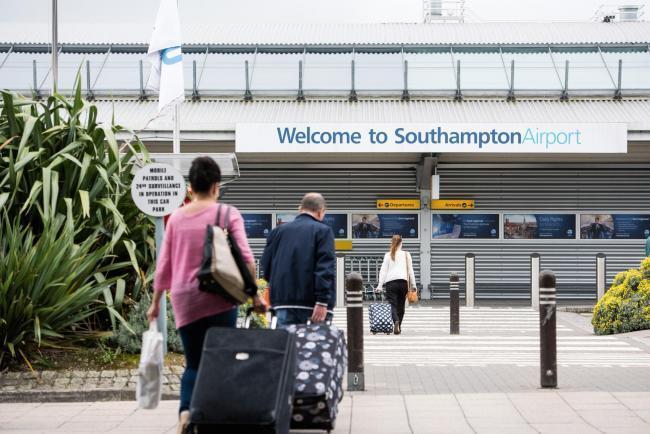


In the late 1980s, Southampton Airport was a modest regional airfield, affectionately known but commercially sleepy. Its runway was short, its facilities aging, and its future uncertain.
Then came Peter de Savary: a cigar-smoking, swashbuckling entrepreneur known for his America’s Cup yachts and his penchant for buying landmarks like Land’s End and Skibo Castle.
What followed was a classic de Savary whirlwind of high-stakes dealmaking, complex corporate structures, and ambitious vision that would ultimately lay the foundation for the international airport Southampton is today.
In 1988, de Savary’s property and shipping group, Highland Participants, made its move. The airport had been stabilised by owner J N Somers since the 1960s, but de Savary saw undeveloped potential.
For years, business folklore has held that de Savary acquired the airport for a nominal sum of just £2. It makes for a compelling story of a tycoon's shrewdness—picking up a major asset for the price of a newspaper.
However, the reality was far less theatrical and far more complex. The exact terms of the acquisition were never fully disclosed to the public.

While the "£2" figure made for great chat down the pub, it likely represented only a nominal equity value used for accounting purposes.
The deal was structurally an assumption of significant corporate liabilities, estimated by some financial analysts at the time to be around £50 million.
The true "price" was effectively buried within these complex debt structures and future development commitments, leading serious observers to categorise the transaction amount simply as undisclosed or part of a broader, confidential commercial arrangement.
De Savary didn't go it alone.
He formed a joint venture called Southampton (Eastleigh) Airport Developments Limited with the London and Edinburgh Trust (LET). Their goal wasn't just to fly planes; it was to unlock the real estate value of the land surrounding the runway.
De Savary’s team wasted no time. They aggressively pursued planning permission, not just for a new terminal, but for extensive business parks on the airfield's perimeter.
The strategy was clear: de-risk the asset by securing the rights to build, then sell before the heavy lifting of construction began.
Read more:
- Why two Southampton mansions have the same name
- Classic encounter as Saints demolish Charlton on opening day
- How Iron Duke came to make Hampshire his home after his victory at Waterloo
- Where in Southampton is Crabniton and how did it get its name?
- The truth about Southampton's 'deceptively gentle' estate
The plan worked.
By 1990, the consortium had secured the necessary permissions to transform the site. De Savary, true to his reputation as a restless speculator, was ready to move on.
In 1990, the consortium sold the airport operation to BAA plc — the owners of Heathrow.
BAA paid for the privilege of executing the vision de Savary had papered. They invested £27 million into the construction of the glass-and-steel terminal that stands today, which was finally opened by the Duke of York in 1994.
While Peter de Savary held the airport for only two years, his tenure was the pivot point. He bought a local airfield with debts and sold a development-ready international transport hub.