


The US Federal Reserve has raised its benchmark interest rate for the first time since 2023 in an effort to quell stubbornly-high inflation, a move that could spur a sharp response from the White House.
The quarter-point increase on Wednesday lifts the Fed’s key rate to about 3.9% and, over time, could result in higher borrowing costs for mortgages, auto loans, and credit cards.
In a set of quarterly projections, the Fed also signalled that its rate-setting committee expects to hike rates a second time later this year to 4.1%.
“Today’s policy action will support a timelier return” to the central bank’s 2% inflation goal, the Fed said in a statement.
The move comes as Americans are already struggling with high costs for food, petrol and housing.
Affordability has taken on a leading role in the upcoming mid-term elections, just seven weeks away.
The rate hike is a surprising turnaround for Fed chairman Kevin Warsh, who was appointed by US President Donald Trump and took over the top job in May.
Mr Warsh often suggested last year when under consideration by Mr Trump that the Fed could reduce its key rate, echoing the president’s call for lower borrowing costs.
And in April, when Mr Warsh’s nomination was under consideration by the Senate Banking Committee, Mr Trump said in a television interview that he would be disappointed if Mr Warsh did not cut rates.
On the same day, however, Mr Warsh told the committee he did not promise Mr Trump he would cut rates and said he would be “an independent actor” as Fed chairman.
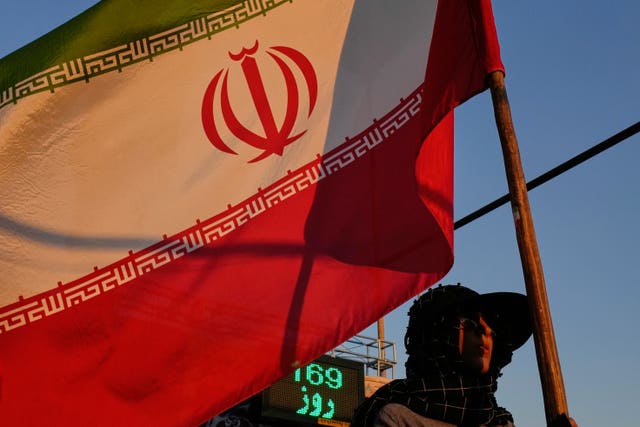
Yet the ongoing disruptions from the Iran war, which have pushed up average gas prices more than 7% from just a month ago, threaten to spread through the economy and keep broader inflation stubbornly high.
An inflation report last week showed core prices, which exclude food and energy, accelerated a bit in August.
According to the Fed’s preferred measure, inflation was 3.7% in July compared with a year ago, up from 2.3% in April 2025, just before Mr Trump unveiled sweeping tariffs.
Core inflation, which excludes the volatile food and energy categories, was 3.3% in July, the latest data available, up from 3% just before the Iran war and far above the Fed’s target.
Earlier on Wednesday, the government said retail sales jumped 1.2% in August from the previous month, a sign that consumers are still spending at healthy levels despite sentiment surveys that indicate Americans remain gloomy about the economy.
Strong spending is a sign that interest rates at current levels are not necessarily restricting the economy and cooling inflation.
“While uncertainty remains elevated owing, in part, to geopolitical developments, domestic spending has been resilient,” the Fed said, a likely reference to ongoing consumer spending and strong investment in AI data centres by large technology companies.
Higher inflation is not all about gas prices. Ongoing investment in AI has driven up prices for computer chips and other electronic gear, adding to overall inflation.
Tariffs may still be elevating some costs, such as appliances, which jumped in price last month.
Mr Trump harshly criticised Mr Warsh’s predecessor, Jerome Powell, for not cutting rates quickly enough.
His Justice Department even launched a criminal investigation into Mr Powell over brief testimony he delivered to the US congress last year, though that probe was eventually dropped.
Kevin Hassett, Mr Trump’s top economic adviser, was asked in an interview with Fox News on Sunday how Mr Trump might react to a rate hike.
“I’m sure he’s not going to be super happy about it, but he will defend the independence of Kevin Warsh above all,” Mr Hassett said.
Mr Warsh might also have a measure of protection from the fact that his father-in-law is Ronald Lauder, a friend of Mr Trump’s and a billionaire donor to his campaigns.
Even if Mr Warsh decides to support a rate hike, it is not clear how many more will follow.
It is unusual for the Fed to change rates just once.
Typically the central bank embarks on a series of hikes or rate cuts to push the economy in the direction it seeks.
There is one precedent for a single hike: In 1997, former chairman Alan Greenspan lifted rates by a quarter-point in March of that year.
Yet a financial crisis ignited in Asia that July, prompting the Fed to remain on hold.
When the crisis worsened in 1998, the Fed ultimately cut rates three times that fall.
But for now, Wall Street investors have forecast three hikes for the Fed, with additional increases in December and March.


Share