


Report this comment
  • "An inquiry headed by David Attenborough ?


    -
     

    Going by the below UK Renewable Energy Roadmap this Coalition Government hasn't carried out an in-depth inquiry into the sustainability of Wood/Grass Biomass Energy.

    -

    An inquiry headed by David Attenborough could keep everyone happy?.. He supported Glyndebourne in their successful application to obtain planning permission for a wind turbine in an Area of Outstanding Natural Beauty, and gave evidence at the planning inquiry arguing in favour of the proposal.


    1) This Coalition Government says Biomass heat technologies supply chains have not yet been tested at scale, the key issue of whether the global supply of sustainable feedstocks can fuel it, given that supplies are finite and there are competing uses in the bio-economy.


    2) This Coalition Government says Cost reductions are expected for offshore wind and solar PV as supply chains and technologies develop to 2020.. AFAIK this Government sees no such Cost reductions for Wood/Grass Biomass Energy.

    -


    UK Renewable Energy Roadmap.

    July 2011.

    The nations of the United Kingdom are endowed with vast and varied renewable energy resources. We have the best wind, wave and tidal resources in Europe.

    The UK leads the world in offshore wind, with more than 700 turbines already installed, and is accelerating the deployment of onshore wind with the biggest projects in Europe already operating and under construction in Scotland and Wales.

    Taken together onshore and offshore wind provide enough power for more than two and a half million homes. But we could do so much more. Our challenge is to bring costs down and deployment up.

    This document – the UK’s first Renewable Energy Roadmap – sets out our shared approach to unlocking our renewable energy potential.


    Plant Biomass

    The range of cost uncertainty is particularly large for technologies such as marine, which is at the early stages of commercial deployment in the UK, and biomass heat technologies, for which supply chains have not yet been tested at scale.

    Cost reductions are expected to be most pronounced for electricity technologies, particularly offshore wind and solar PV, as supply chains and technologies develop to 2020.

    The cost of generating heat and electricity from fossil fuels is also expected to rise over time.

    It is essential that costs of renewable technologies fall over the decade as deployment increases. Our goal in the medium to long term is to help renewables compete on a level playing field against other low carbon technologies. We will regularly review our subsidy programmes to take account of cost changes from supply chain development, learning, and technical breakthrough.

    Figure 19 sets out the results of analysis of the potential for growth in biomass electricity generation to 2020.

    The breadth of the central range reflects the dynamic potential of the large-scale biomass sector and the key issue of whether the global supply of sustainable feedstocks can fuel it, given that supplies are finite and there are competing uses in the bio-economy. The low and high scenarios reflect initial views from industry on the upside potential and downside risks.

    Dedicated biomass electricity offers great potential for cost effective renewable electricity generation, provided that it is generated from sustainable feedstocks. As noted above, the Government’s ambition for biomass electricity depends on the availability of suitable feedstocks. The Government considers that sustainable biomass should be cultivated, processed and transported in a way which delivers real and significant greenhouse gas savings compared to the fossil fuel it is replacing. In particular, forest and woodlands must be sustainably managed to ensure continuing supplies in future years.

    There would also be significant public concern to projects delivering unsustainable generation.

    -


    http://www.decc.gov.
    uk/assets/decc/11/me
    eting-energy-demand/
    renewable-energy/216
    7-uk-renewable-energ
    y-roadmap.pdf"
  • This field is mandatory
  • This field is mandatory
  • Please note we will not accept reports with HTML tags or URLs in them.


  • Enter the above word in the box below

Please be fair, courteous and respectful to the views of others so we can build a vibrant community in a safe online environment. You are personal liable for your comments and action will be taken against anyone who offends, ridicules or posts malicious and damaging views. If you wish to complain, please contact us.

Helius vow to press ahead with biomass plans for Southampton docks

Vow to press ahead with biomass plans Vow to press ahead with biomass plans

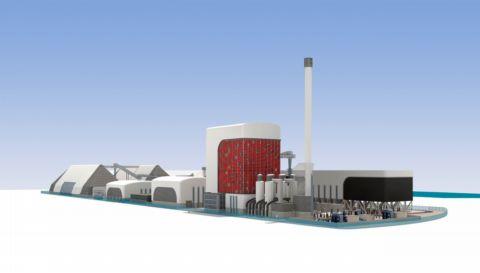
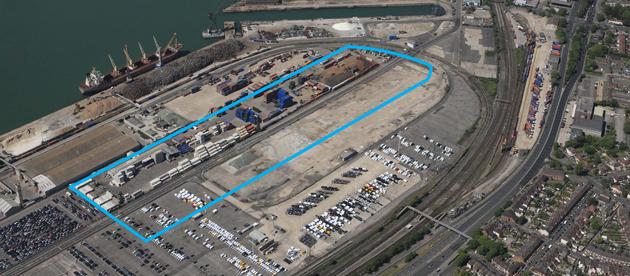
THE developer behind a proposed power plant at Southampton docks has insisted it will press ahead with the scheme.

It comes after councillors agreed planning objections to the controversial scheme.

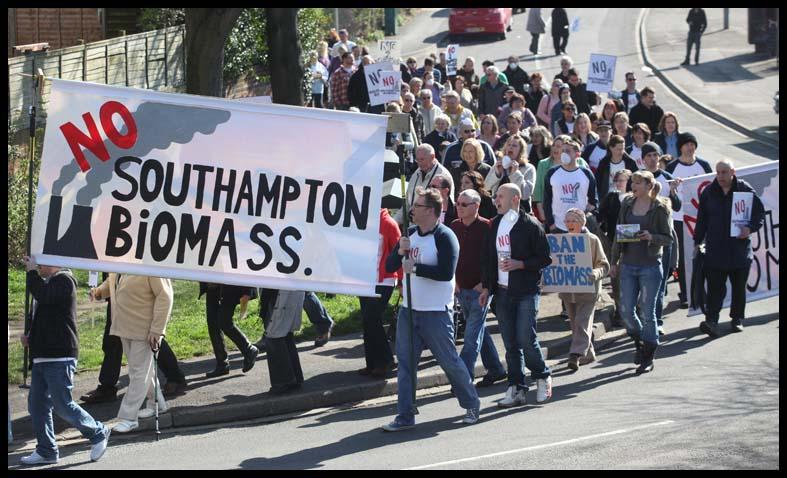
Around 60 residents attended a meeting where councillors agreed a formal response to a consultation by Helius Energy on revised plans for a 100-megawatt biomass plant, 250 metres from the nearest homes in Millbrook.

Planners revealed they had received 239 written objections.

Councillors agreed “insufficient” detail had been provided to properly assess impact on air quality and that the “inappropriate size” and “poor architectural” quality of the proposed plant were unacceptable.

They also wanted specific details about how steam and hot water from the plant would be reused locally.

The 800,000 tonnes of wood fuel to be burnt at the power station would be in excess of limits set out in a forthcoming countywide minerals and waste plan, councillors noted.

The No Southampton Biomass campaign group accused Helius of manipulating computer images to show the proposed power station from the best angles and said the consultation was inadequate.

They said the plant was still too big, too close to homes, not green and would pollute the already poor local air quality.

Campaigner Eloisa Gil- Arranz told the meeting: “It’s an ill-conceived monstrosity whose sole purpose is to line the pockets of Heluis fat cats.”

Council leader Richard Williams said: “We are sending a clear signal to Helius that Southampton does not want their proposed power station and we will object to their current plans.”

Helius planning director Paul Brighton said the public consultation, which runs until August 3, had been a “full programme” and insisted the biomass plant was needed to help cut carbon emissions. “If climate change was not an issue we would not be here,” he said.

He said the objections would be “carefully considered” to help Helius “refine” its proposals but anticipated a planning application would be submitted to the National Infrastructure Directorate by the end of the year, which will recommend to Government whether to give the final go-ahead.

Speaking after the meeting Mr Brighton denied images had been manipulated.

He said: “We commissioned three independent and experienced professional consultants to undertake the preparation of the images on our behalf.

"The photomontages that they produced conform to the technical guidelines for such images set out in the Landscape Institute’s professional guidance for such work.

"The 21 viewpoints selected were agreed in advance with Southampton City Council as part of the scoping of the environmental statement and were surveyed to verify the accuracy of the images."

Local Businesses

About cookies

We want you to enjoy your visit to our website. That's why we use cookies to enhance your experience. By staying on our website you agree to our use of cookies. Find out more about the cookies we use.

I agree