

Remembering the fallen
As schoolchildren and veterans gather in Southampton for today’s special Armistice Day ceremony JON REEVE reveals the remarkable stories behind four of the new names to be unveiled on the city’s new memorial walls in Watts Park.
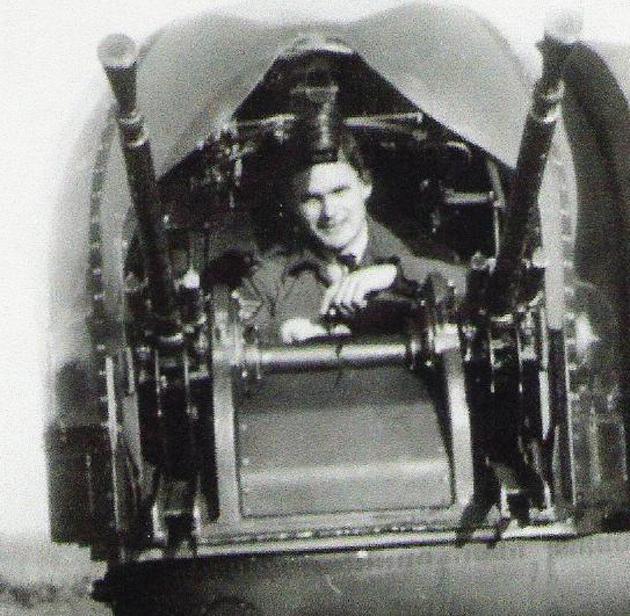
HE had already completed a full tour of duty flying highly dangerous missions over Europe, being shot at night after night.
But such was the bond Bob McPherson had built with other crew members of his Lancaster bomber that in May 1945 the 21-year-old Southampton man and four others volunteered to continue flying as the focus of the Second World War shifted to Asia.
Despite having survived being hit by gunfire several times during 32 flights over Germany, the friends’ luck ran out on their first mission from India, four years after Bob had lied about his age to enlist for the Royal Air Force Voluntary Reserve.
Now, 66 years later, the rear gunner’s name is finally to be included in his home city’s symbol of remembrance for its war dead, as Southampton’s new memorial walls alongside the Cenotaph are unveiled.
School children and veterans are due to gather in Watts Park for today’s special Armistice Day ceremony.
The walls commemorate the 3,298 armed services and Merchant Navy personnel from Southampton who died in the First and Second World Wars and other conflicts since.
Bob’s nephew, Ron Manley, who has painstakingly researched the circumstances of his uncle’s death, after the victims’ family were initially told only that crewmen were “missing in action, presumed dead”, said seeing his name on the memorial will be a significant moment, especially for those who knew him.
He said: “It’s important for his wife and his two sisters as well.”
Bob’s American B24 Liberator heavy bomber came under heavy fire on its mission to bomb Japanese ships in the harbour at Port Blair, Chatham Island, in the Andaman Islands in the Bay of Bengal.
Despite being hit it completed its bombing run but crashed shortly after, killing ten of the 11 crew instantly.
The Japanese buried the men in a single grave, which was badly damaged in the 2004 Boxing Day tsunami, turning the area where the crashed plane had remained into a swamp.
Now Ron is campaigning to see the grave exhumed and the bodies returned for a fitting burial in India.
He said: “It’s a massive long-term project but at least the MoD and Commonwealth War Graves Commission are on board now.
“I just hope they get it done while most of the remaining relatives are still alive.”
Frederick remembered thanks to his great niece
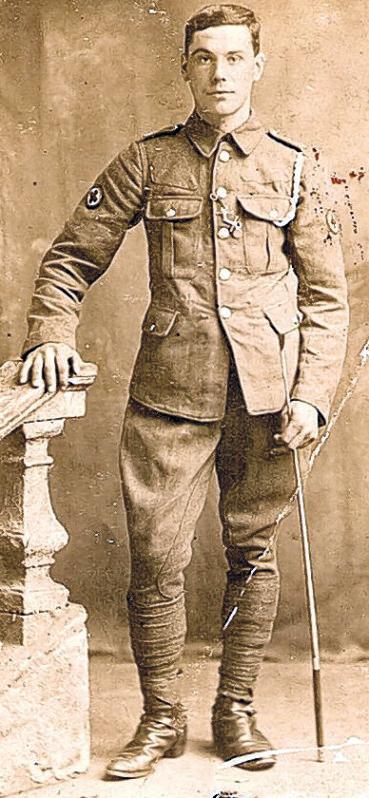
FREDERICK Barrow, pictured, came incredibly close to joining his four brothers in successfully seeing through the whole of the First World War.
A Lance Corporal with the 10th Battalion, Hampshire Regiment, he had volunteered when the war began in 1914 and went to the Western Front to fight in the trenches before moving on to see battle in Gallipoli.
By the summer of 1918 he was in northern Greece and on September 1 – just two months before Armistice Day – joined in the British assault on Roche Noir in Salonika.
After a day of fighting the 25-year-old soldier from Shirley was one of 47 to lose their lives, with a further 132 lying wounded.
Frederick’s name was not included on the Cenotaph but thanks to his great niece, Jessica Barrow, it is on the new memorial walls.
Jessica, 30, said: “We really don’t know why it wasn’t included but I just think it’s important that he is honoured for his part in the war. He made the ultimate sacrifice and it’s nice for him to be remembered”.
Antiques Roadshow to hear moving tale of soldier’s watch
THE amazing story of how his great uncle’s watch travelled home from a battlefield in France will be told by a Romsey man on a special edition of the Antiques Roadshow.
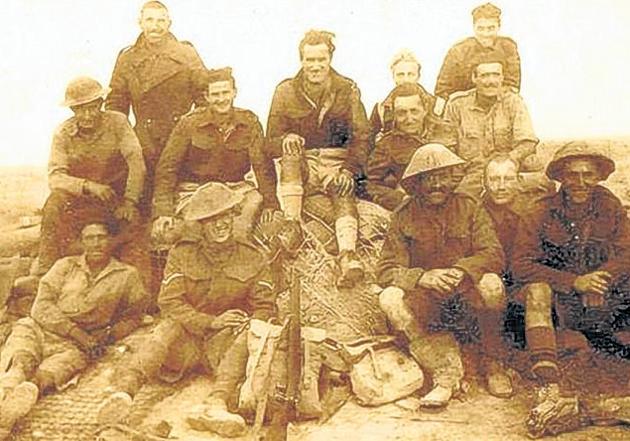
The watch belonged to 19-yearold Private Arthur Dibden from Wellow, who was killed at the Battle of Villers Bretonneaux in April 1918 as his regiment, the Devonshires, fought to halt the Germans’ last great offensive of the war.
The history of the watch has been researched by Danny Brown, who describes to expert Paul Atterbury on the BBC antiques show this Remembrance Sunday how it came home.
Private Dibden’s body was looted by a German soldier, who took the watch. The German was killed when two Australian brigades launched a counterattack.
An Australian soldier found the watch and read the inscription inside. On his way back to Australia, via Tidworth, he made a point of visiting Arthur’s parents at Wellow Wood to return his watch.
Wind the hands forward 79 years and a small, blue pouch containing the watch fell from the loft of a disused milking parlour at the farm belonging to Mr Brown’s grandfather, Les Dibden, at Belbins, near Romsey.
“Inside the back cover of the watch was a scratched inscription almost as clear as the day Arthur had written it,” said Mr Brown.
Ironically it read Steal not. AV Dibden, Wellow Wood, Hampshire.
Mr Brown said his grandfather did not know how his brother, who he could barely remember, died as his family seldom talked about him.
Mr Brown trawled through documents to piece together Arthur’s army career.
“Two years after the research project started, the family, and, most importantly, Arthur’s last surviving sibling, my grandfather, a toddler when Arthur went to war, finally knew what had happened to Arthur and where he now rests,”
said Mr Brown.
Sadly Les Dibden died before he could visit Arthur’s last resting place, a small cemetery filled mostly with unidentified Devon’s at Villers Bretonneaux, but thanks to the watch and Mr Brown’s painstaking research, Les’s brother had become far more than just a vague memory.
‘I’m proud he is being recognised’
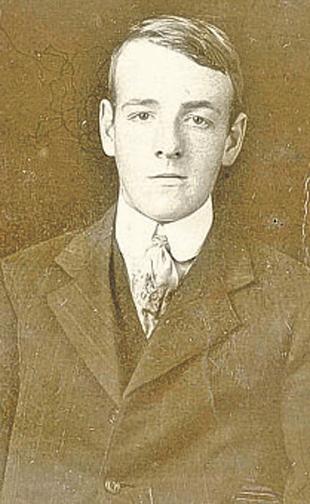
HIS family thought he was too ill to go to war but brave George Hayes was determined to do his duty.
He signed up to the Queen’s Royal Regiment as a Private in the 2nd Battalion and in March 1941, just weeks after his 21st birthday, was sent off to fight in Egypt, where he died ten months later.
Great neice Kerry Freemantle, 36, who lives in Bishopstoke, said she is proud George’s sacrifice is now being recognised.
She said: “This should have been done years ago when more next of kin would have been here.
“He wasn’t a well boy because he had a lot of chest problems and no one was happy that he went because he wasn’t well enough, especially not to go to the desert, and he actually died of pneumonia.
“His enlistment papers say that he had a ‘scar of old superficial burns on back of left chest’. Maybe this didn’t help his medical condition. But he chose to go and it must have been when he was less ill. The fact he didn’t die of war wounds makes it even sadder. It’s such a shame.”
Read more memorial stories in today's Daily Echo


Comments: Our rules
We want our comments to be a lively and valuable part of our community - a place where readers can debate and engage with the most important local issues. The ability to comment on our stories is a privilege, not a right, however, and that privilege may be withdrawn if it is abused or misused.
Please report any comments that break our rules.
Read the rules hereLast Updated:
Report this comment Cancel